
When I design with moss, I don't start with the question, “Where can I put some greenery?”
I start with the space.
Every interior has its own character, its own limitations and its own requirements. Sometimes there is beautiful natural light. Sometimes there is almost none. Sometimes a wall is quietly positioned in a private corner. And sometimes it is right in the middle of a busy environment, with people constantly walking past, children touching everything and very little room for traditional planting.
This particular project was one of those spaces.
The brief was to introduce a strong biophilic element while working with some very specific conditions: high foot traffic, families and children using the space, and very limited natural light.
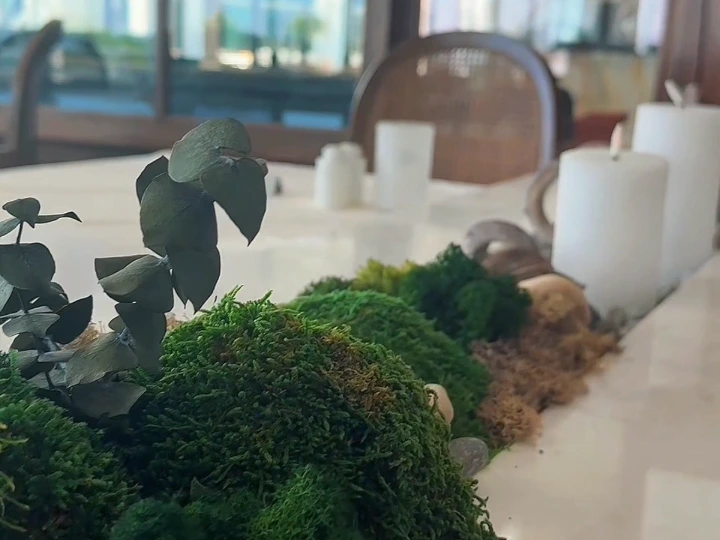
Designing around the reality of the space
Biophilic design is not simply about adding plants to an interior.
In this project, a traditional living plant installation would have brought additional requirements. Living plants need the right amount of light, watering, drainage and ongoing care. In a busy environment, they can also become difficult to maintain and protect.
Preserved moss offered a different possibility.
Because the moss has already been preserved, it does not need watering or natural sunlight to remain visually beautiful. It can therefore bring the texture, colour and feeling of nature into areas where living planting would simply not be practical.
But this does not mean that preserved moss can be installed anywhere without thinking.
The environment still matters.
The Plant Filler Composition
For this project, I created a Plant Filler Composition to complement the moss installation.
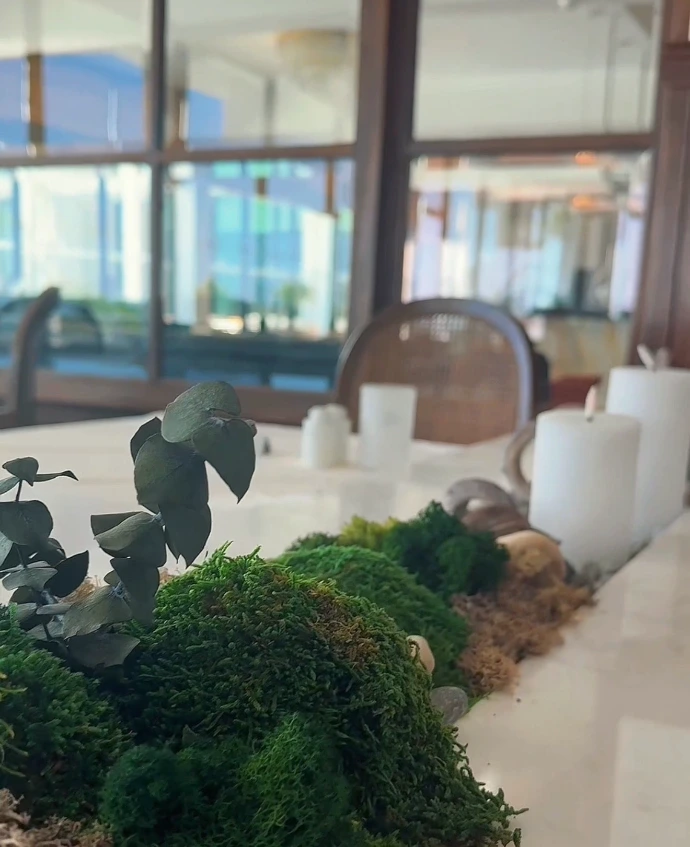
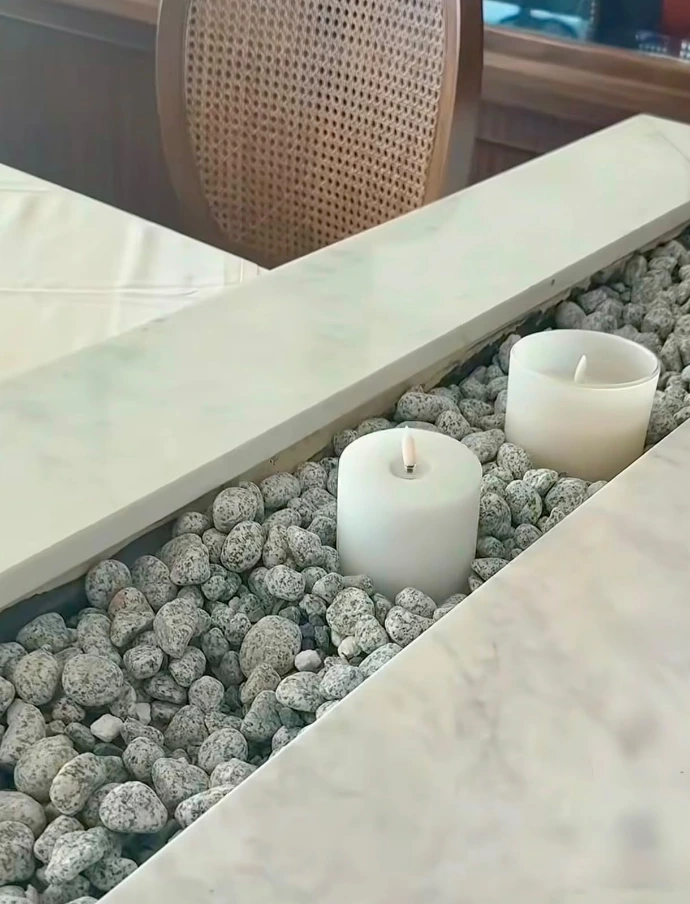
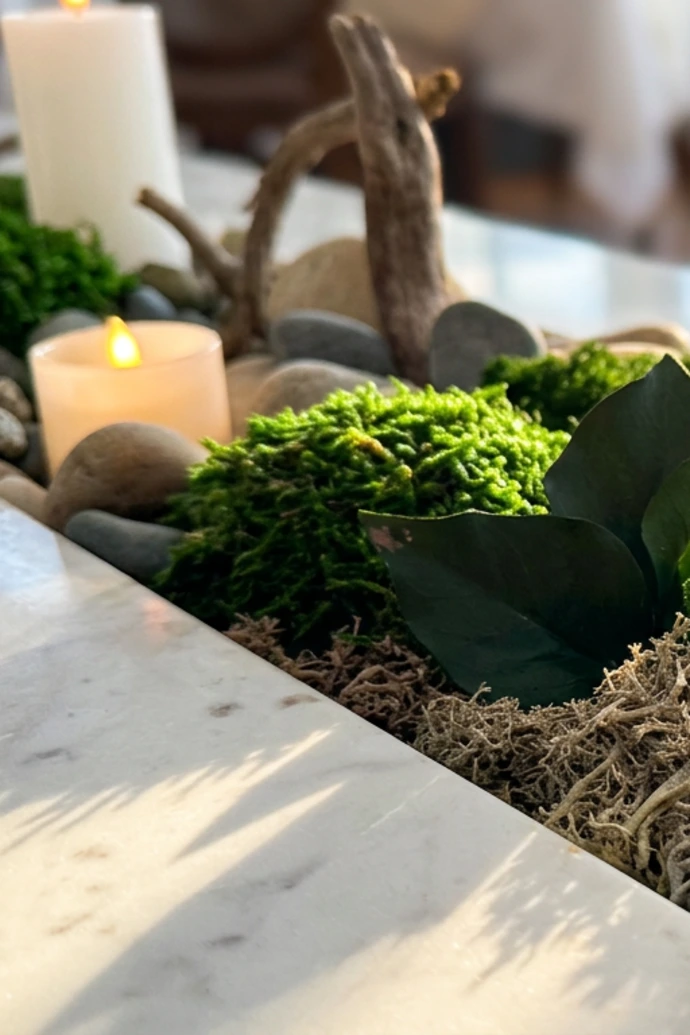
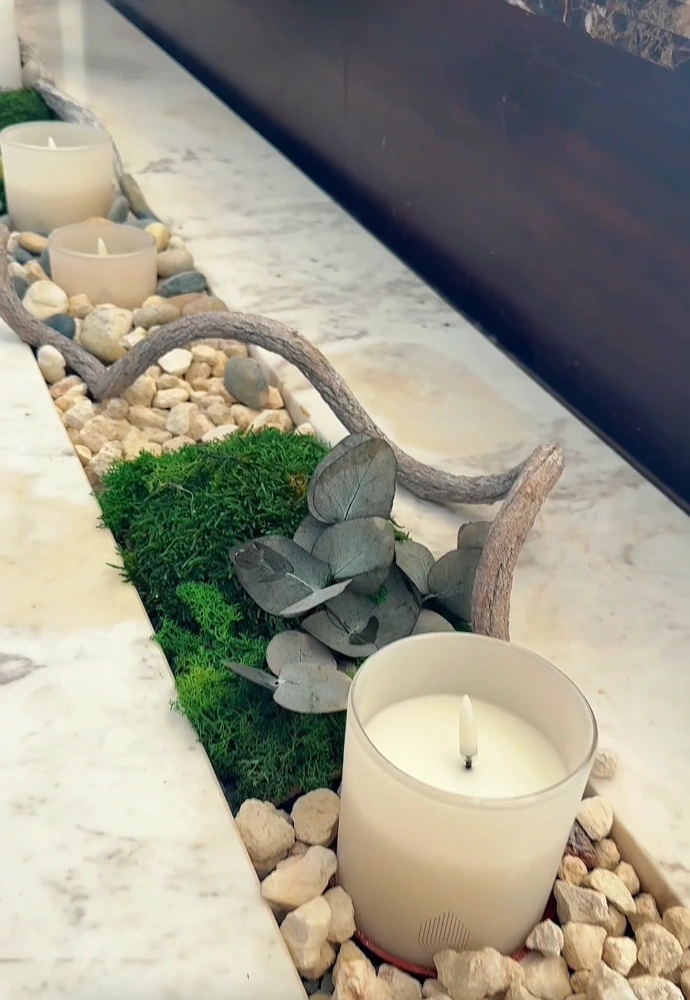
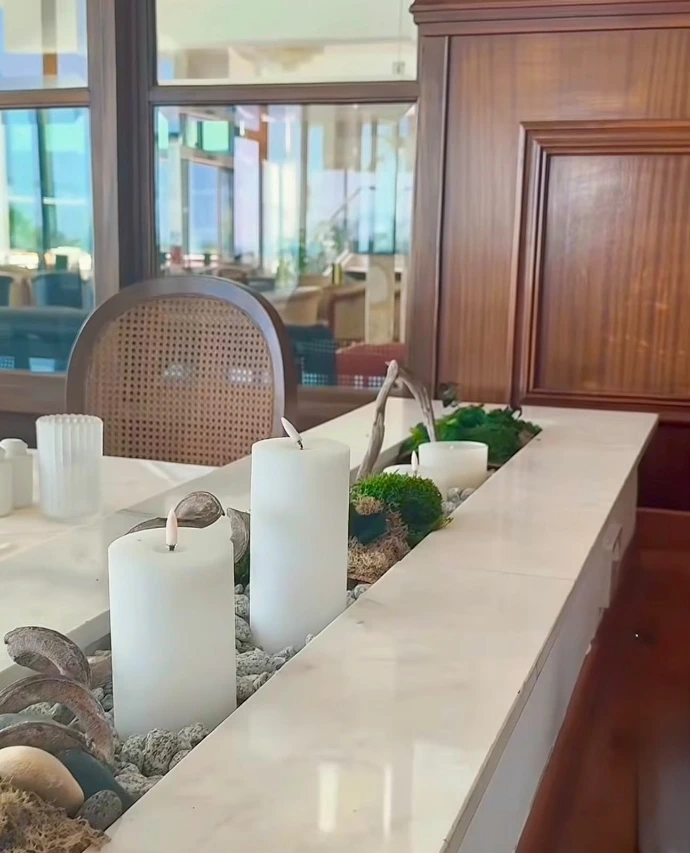
The materials were carefully selected according to the conditions of the premises. Because this is a high-traffic area with families and children and very limited natural light, I wanted to use materials that would be beautiful, durable and appropriate for an indoor environment without creating the maintenance requirements of living plants.
I chose a combination of preserved moss, preserved foliage, natural dried elements and selected botanical materials to create different textures and layers within the composition.
The moss forms the soft, organic foundation of the design. Around it, I introduced preserved foliage to create height and movement, while the dried natural elements add structure, shape and contrast.
I also considered the colour palette of the interior when selecting the materials. Rather than introducing too many colours, I worked with natural greens and complementary earthy tones so that the composition would feel connected to the surrounding interior while still becoming a feature in its own right.
The most successful biophilic designs are not the ones where we force nature into a space. They are the ones where we understand the space first and then find the right way to bring nature into it.