
What happens when interior design students are invited to step beyond traditional materials and explore the creative possibilities of nature?
This was the starting point of a special hands-on workshop delivered by Design With Moss at the University of Central Lancashire (UCLan) Cyprus, for Year 2 Interior Design students.
The workshop introduced students to the world of preserved moss and its growing potential as a creative medium in contemporary interior design.g here...
Learning through nature and experimentation
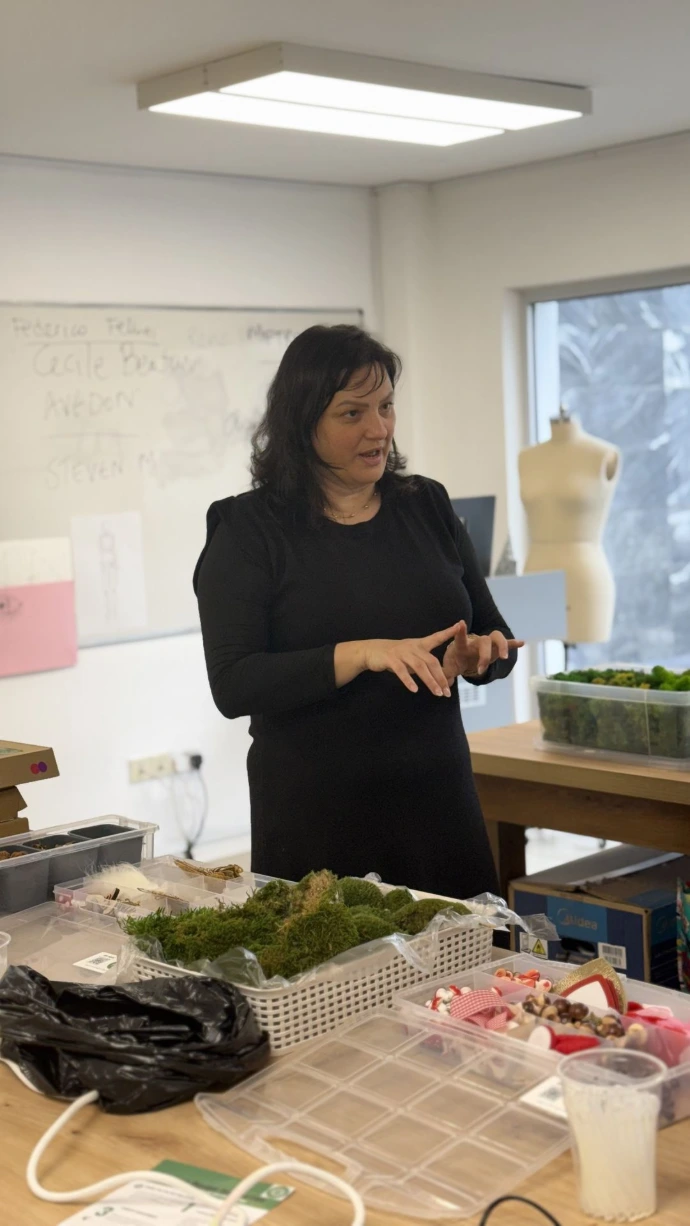
The session began with an introduction to preserved moss, exploring its characteristics, different textures, colours and applications within interior spaces.
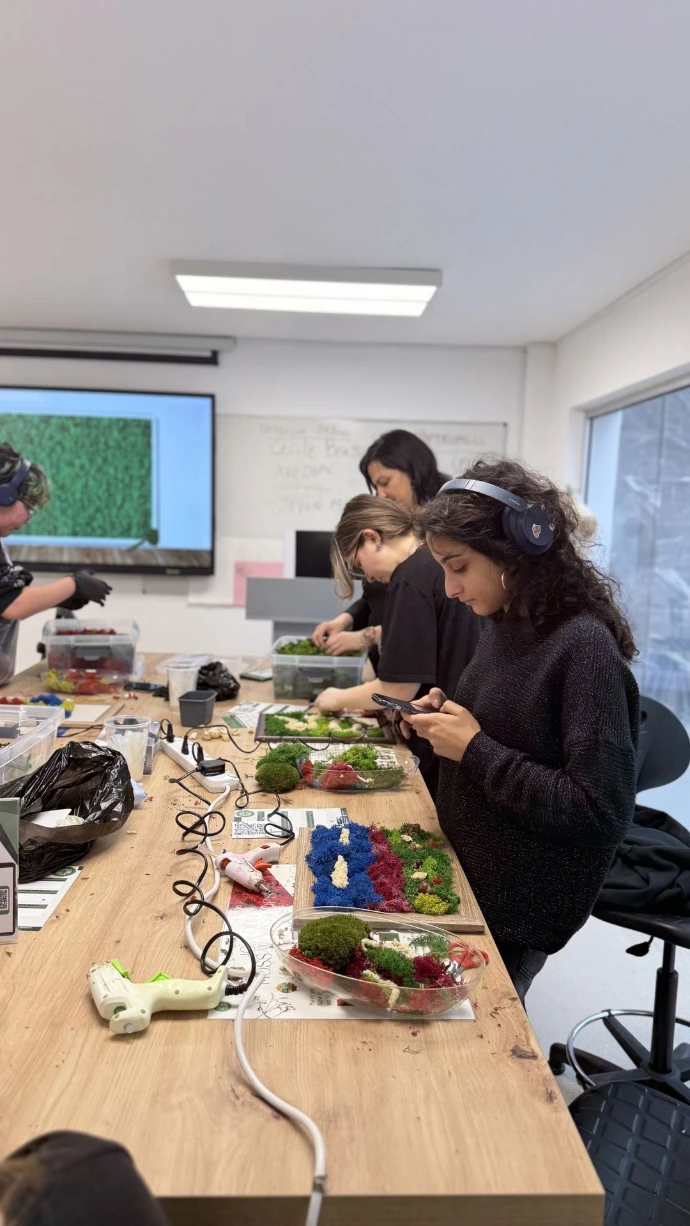
Students had the opportunity to discover different types of preserved moss and natural decorative elements, understanding how these materials can be combined to create depth, contrast, texture and visual interest.
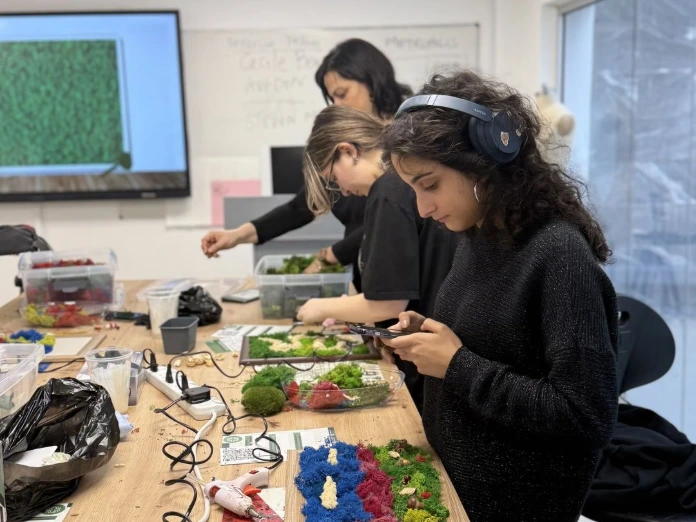
Rather than simply learning about the material, students were encouraged to touch, explore, experiment and develop their own creative interpretations.
The objective was to introduce a different perspective on interior design materials and demonstrate how natural elements can become an integral part of an interior concept.
From inspiration to individual creations
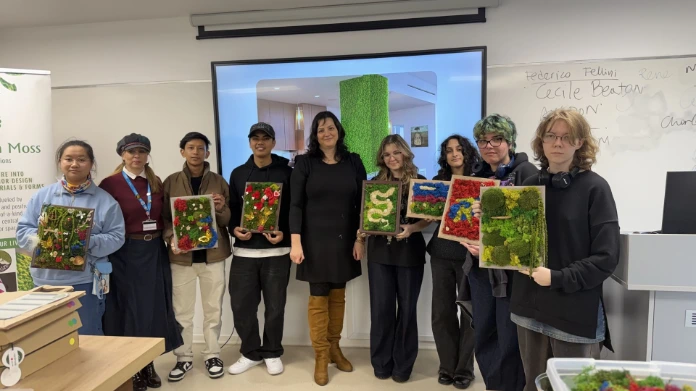
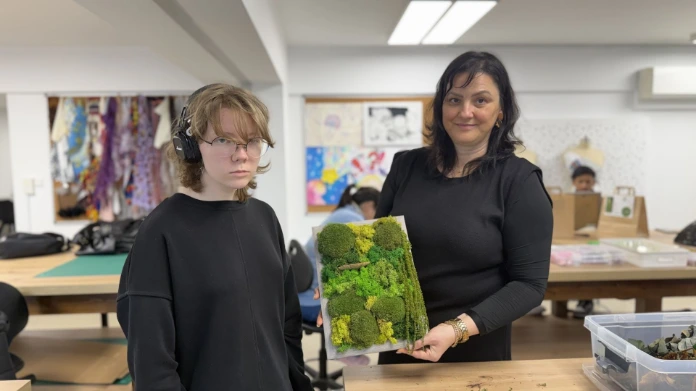
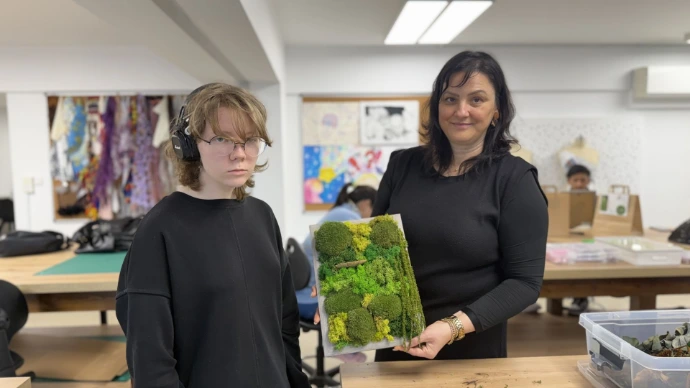
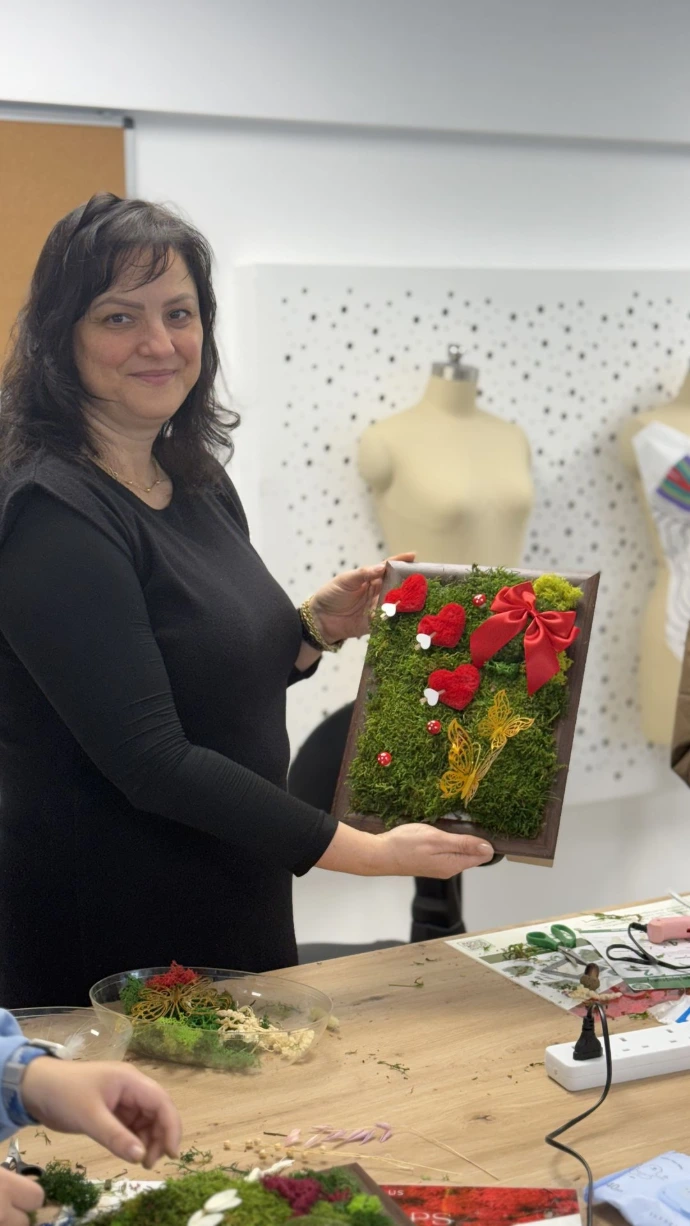
The most exciting part of the workshop was seeing the students transform their ideas into individual moss artworks.
Each student explored their own combination of colours, textures and natural elements, making creative decisions about composition, balance and visual expression.
There was no single design outcome to follow. Every creation reflected an individual approach, demonstrating how the same materials can inspire completely different artistic results.
Through this practical experience, students explored:
The creative applications of preserved moss in interior design.
The relationship between colour, texture, form and composition.
The possibilities of combining different natural materials.
The importance of experimentation and individual creative expression.
How biophilic design can introduce nature-inspired experiences into interior environments.
Connecting education with professional practice
At Design With Moss, we believe that understanding materials goes beyond looking at samples or studying their properties.
It is about experiencing them, understanding their possibilities and discovering how they can be translated into meaningful design solutions.
Bringing preserved moss into the university environment offered students an opportunity to engage with a specialised material used in contemporary biophilic interior design.
Preserved moss can be incorporated into bespoke wall installations, decorative panels, framed artworks and architectural features. It offers designers an opportunity to introduce natural textures and organic forms into spaces without the ongoing maintenance associated with living plants.
For future interior designers, exploring alternative materials and innovative applications can open new creative directions in their professional practice.
A new perspective on biophilic design
Biophilic design is about creating meaningful connections between people and nature through the spaces we inhabit.
It is not only about adding plants to an interior. It is also about considering natural patterns, organic forms, textures, colours and materials as part of the overall design experience.
Workshops like this encourage the next generation of designers to look at nature not just as inspiration, but as a design language.
A creative experience worth sharing
Seeing the students' individual creations come together was a wonderful reminder of the diversity of creative thinking.
Each artwork was different, each student brought their own perspective, and each result demonstrated the possibilities of working with natural materials.
A special thank you to the Interior Design students and UCLan Cyprus for welcoming Design With Moss and providing the opportunity to share knowledge, materials and creative inspiration.
I hope this experience encourages the students to continue exploring the relationship between nature, creativity and interior spaces.
Because great design begins with curiosity, experimentation and the courage to explore something different.